Table Of Content
- Is The Filtered Water On A Cruise Ship Recycled From Toilet Water?
- Do sewage treatment plants work like septic tanks?
- Do you utilize beforehand handled wastewater if you end up on a cruise ship?
- The Problem with Waste Disposal on Cruise Ships
- Do you find it easier to increase or reduce the amount of waste you produce on cruises? How so?
- Work to Date on Cruise Ship Discharges
- Carnival Ship Rescues 27 People Adrift at Sea in the Caribbean

Cruise ships work some water magic to stay in the good books of environmental regulations and be savvy with resources. Some are burned on board, and some are offloaded for recycling or disposal. Records on how much solid waste is generated, as well as disposed of, is a mandatory requirement by law. This is where all the collected black water is sent to be filtered and treated so it’s safe and could in theory, be reused. Whereas these cases have occurred, they had been all accidents, and the cruise strains had been penalized in line with strict rules. That is performed to restrict the cruise trade’s environmental affect and defend passengers from publicity to disagreeable smells and micro organism.
Is The Filtered Water On A Cruise Ship Recycled From Toilet Water?
How cruise ships deal with sewage is not that different from what happens in our home sewage systems. For starters, the International Convention for the Prevention of Pollution from Ships requires ships to be at least 5km or 3 nautical miles from land before dumping treated sewage. Keoleian said preventing food waste generation is as important as how it’s managed, and passengers can play a role in minimizing the environmental repercussions. Some of the company’s ships have long had dehydrators, which squeeze the water from food waste and lighten the load that can be taken to landfills, compost sites or waste-to-energy facilities.
Do sewage treatment plants work like septic tanks?
And many cruise ships lack the sewage treatment facilities to adequately filter out toxins. We recommend reading about the cruise industry’s pursuit of carbon neutrality by 2050 to learn more about how cruise ships embrace environmentally-friendly technologies and methods. You can also read how Carnival invested over half a million dollars into a food waste biodigester. This unique and responsible attitude towards waste demonstrates how cruise lines prioritize sustainable waste management solutions. In the past, cruise ships and other large vessels simply waited until they were far at sea, then released their waste tanks. Naturally, this short-sighted and irresponsible attitude towards waste disposal damaged sea and ocean ecosystems.
Do you utilize beforehand handled wastewater if you end up on a cruise ship?
Even though they are designed to be completely leak- and odor-proof, strategically positioning them within the ship’s off-limits areas reduces the risks of any accidents. They have to – people are becoming more conscious of the impact we’re having on the planet, and any industry which doesn’t try to improve will only be left behind in future. Some cruise lines have started to introduce a nominal charge for additional entrees, either for the second or starting at the third. The charges tend to be small but it will help to deter guests with bigger eyes than stomachs from unnecessarily ordering extra meals.
“And that was good, but not necessarily good enough,” said Bill Burke, the company’s chief maritime officer. Black water is a time period used to explain human wastewater inside the maritime world, together with by the cruise business. Water that has are available in contact with human feces, urine, or rest room paper is deemed black water. As soon as the water has been filtered and closely handled to make sure it’s sanitary and secure, it may be discharged into open water. This may solely happen in sure areas the place the impression on marine life and the ecosystem shall be minimized. Debuting this year, on two of the cruise company’s newest ships, will be the cruise industry's first systems to turn solid waste directly into energy on board.
What happens when you flush on a cruise - news.com.au
What happens when you flush on a cruise.
Posted: Sat, 11 May 2019 07:00:00 GMT [source]
Do you find it easier to increase or reduce the amount of waste you produce on cruises? How so?
The fire was quickly extinguished by automatic fire prevention systems in place. However, the event caused a loss of power, and the ship lost propulsion, so the ship was not moving. However, it should be borne in mind that gray water is known to contain large amounts of microplastics, originating in particular from large of amounts of laundry, all the bedding, for instance. Sometimes the gray water is added to the final treatment stage of the blackwater when it is chlorinated.
Do Cruise Ships Reuse Waste Water?
The first step for sewage on a cruise ship is to enter an aeration chamber. This chamber is filled with bacteria which work to break down some of the organic compounds in sewage that contaminate it, removing them from the wastewater. It’s worth remembering that the information is a little outdated now, and more ships are adding wastewater treatment centres when in drydock.
To deal with strong waste, cruise ships segregate the fabric and dehydrate it. All strong human waste is saved in an hermetic holding tank after being handled, dehydrated, and faraway from the wastewater. As an alternative, they’re held till the cruise ship is docked and within the harbor. From right here, it may be disposed of safely and in accordance with native requirements and rules. As soon as the water is separated into the right storage and processing areas, it have to be held within the acceptable tanks. Water contaminated with human waste is saved in specialised, sealed tanks, often called black water storage tanks, or sewage holding tanks.
These tanks are designed to have fully hermetic seals, which assist with odor management. Human waste storage tanks are additionally positioned in areas of the cruise ship which can be removed from areas accessible to passengers. According to environmental regulatory lead at Royal Caribbean International, Nick Rose, the idea that cruise lines go round dumping stuff in the ocean is just wrong. “Our multi-stage treatment systems exceed the requirements of all international regulations,” he says. Cruise ships have a water-treatment system onboard, similar to your hometown.
Sewage treatment plants are among the systems used before discharging to combat and reduce pathogens and contaminants that blackwater can produce. Human waste collectively gets stored in holding tanks and most often gets disposed of in port facilities. And to put the figure into perspective, the world’s oceans contain around 352 quintillion gallons. So if there are around 250 cruise ships producing 30,000 gallons of sewage every day, that’s 2.737 billion gallons each year. When we talk about human waste, we’re generally referring to black water.
It has to be stored somewhere until it’s ready to be discharged, after all. Regular maintenance and inspections are also performed to ensure that the waste water tanks are maintaining their airtight seals. Treating and reusing water isn’t just about being responsible; it’s also a smart financial move and a nod to environmental stewardship. She has worked in the cruise industry since 2015 and has taken over 30 cruises.
The identical applies to hazardous supplies, like medical by-products, cleansing chemical compounds, and extra. Some large cruise shipping lines have violated regulations by illegally bypassing the onboard oily water separator and discharging untreated oily wastewater. These violations by means of a so-called "magic pipe" have been prosecuted and resulted in large fines. To do so, it developed Green Hub, a capacity-building program to identify waste vendors in strategic destinations that has helped divert 92% of its waste from landfills. Vacuum suction lines zip toilets’ contents to marine sanitation farms, which siphon out the water, treat it until it’s drinkable, then pump it into the ocean. Helpful aerobic bacteria digest the remaining sludge in storage tanks until it’s all offloaded ashore, about once a month.
Different areas that have protection status can also have different rules – for example, there is a no-discharge zone covering the Strait of Juan de Fuca and Puget sound near Seattle in the US. The cruise ship industry is steadily rebounding following several temporary shutdowns during the coronavirus pandemic, according to AAA. Subsequently, this led to Carnival installing backup generator systems on all cruise ships in the fleet in an effort to prevent a disaster like this from ever occurring again on a cruise ship. Black water is raw sewage discharge that contains or may have come into contact with some forms of solids (including poop). Till handled, it can’t be discharged into the ocean or ocean, because it might hurt marine life and human beings residing close to coastal areas. As soon as the waste is separated, handled, and saved appropriately, it may be disposed of correctly as soon as the ship visits a port outfitted with the right waste administration amenities.
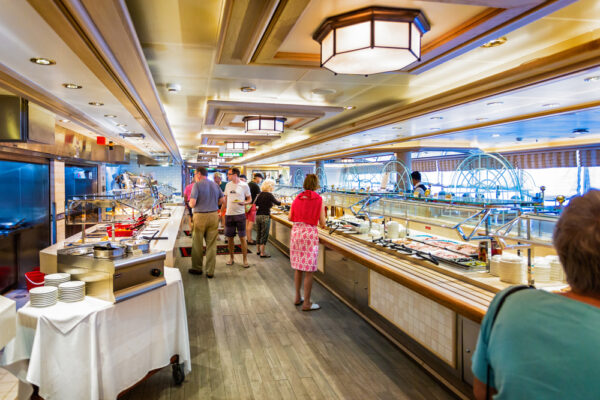
Either food people leave on their plates, or food that is never picked up from the buffet or ordered at a restaurant. Once while I was relaxing in my stateroom on a Royal Caribbean cruise ship, my daughter asked where her poop went after she flushed the toilet and it is actually a good question. First of all, before we start talking about getting rid of waste — what happens to it on the ship?


No comments:
Post a Comment